Disease-specific landmark atlas · Breast

Breast Cancer Landmark Atlas

Unified breast cancer landmark atlas. The axillary and systemic sub-atlases are currently available in Turkish only. Study counts are read live from the registry.

DFS, OS, pCR, cCR, and similar endpoints are not interchangeable. Gold stars are never assigned automatically. Numeric cards are verified summaries of primary publications. A patient summary is not a treatment recommendation.

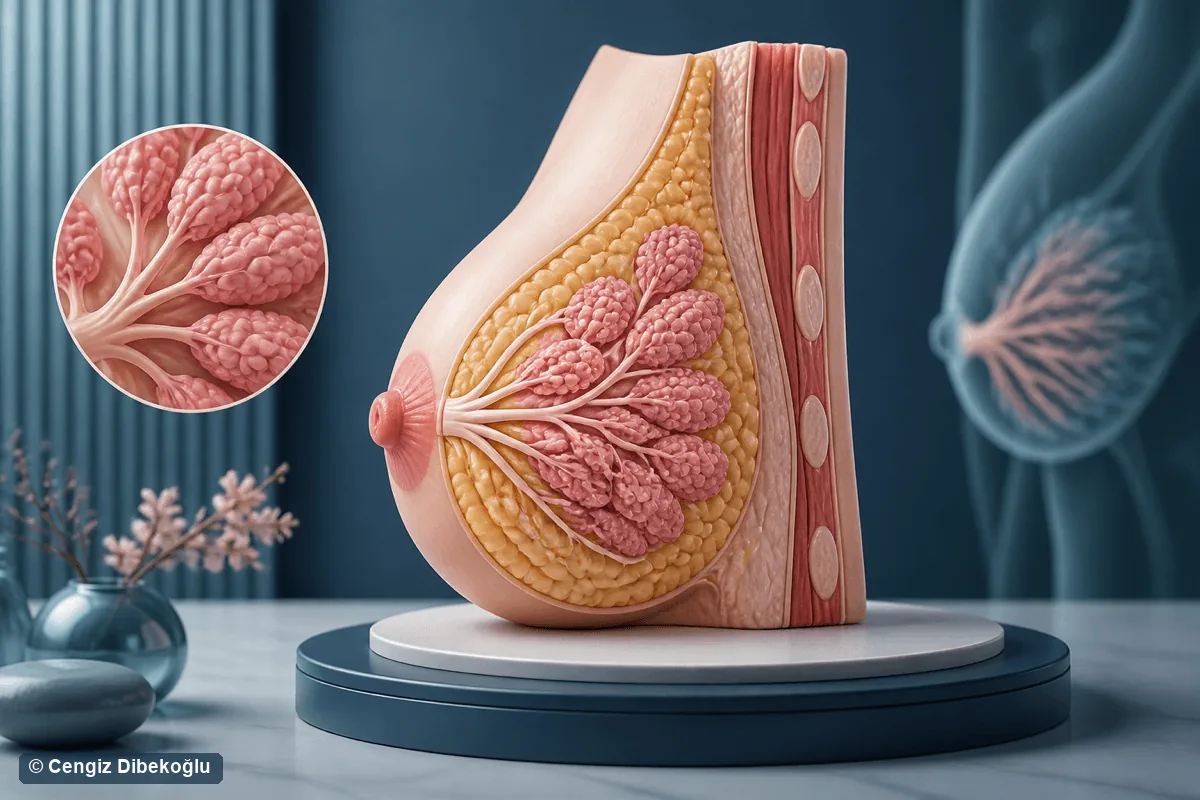
3D educational illustration: breast anatomy

How did treatment change?

In breast cancer, surgery, axillary management, and systemic therapy have become more selective together with de-escalation and genomic selection.

  1. Previous approach

    Wider mastectomy and axillary clearance were often preferred; systemic therapy was planned largely by clinical risk.

  2. New clinical evidence

    Breast-conserving surgery, sentinel-node approaches, axillary de-escalation in selected patients, selective radiotherapy, and genomic assays supporting chemotherapy decisions.

  3. Current approach

    Surgical extent, axillary management, and systemic therapy are planned together by tumor subtype, stage, genomic risk, and patient preference.

This summary is for patient education; individual treatment decisions depend on stage, pathology, imaging, and physician assessment.

Landmark status

Sorting

Topic filters

Showing 20 studies.

Comparison table

Select 2 or 3 studies to compare. Different endpoints are never combined in one chart.

Open this discovery in the “Discoveries That Changed Cancer Treatment” hub

Breast cancer · axilla (armpit)

Gold Star — Paradigm-Changing2017 (10 -year)Source verified

ACOSOG Z0011

What did the researchers want to learn?

In patients planned for breast-conserving surgery and radiotherapy who have one or two positive sentinel nodes, is it necessary to remove all the lymph nodes in the armpit?

What did this study change?

In suitable early-stage disease, routine completion axillary dissection has largely been abandoned; the aim is to reduce the risk of arm swelling while maintaining oncologic safety.

Benefit for patients

In selected patients, completion axillary dissection did not clearly improve overall survival or disease-free survival. As a result, in many patients the larger armpit operation can now be omitted.

Who does this apply to?

Depends on breast-conserving surgery plus whole-breast radiotherapy and on limited sentinel node involvement. It is not automatically extended to mastectomy, to more than three positive nodes, or to patients who do not receive radiotherapy.

This summary is not a treatment recommendation. Decisions depend on the type of disease, stage, general health, and your physician's assessment.

Why this study has a gold star: Enabled reduction of completion axillary dissection in selected patients. (2017 long-term / editorial 2026-10)

Breast cancer · omitting sentinel node biopsy

Emerging Evidence2023Source verified

SOUND

What did the researchers want to learn?

In small breast cancer, is sentinel node biopsy always necessary if the armpit is clear on imaging and examination?

What did this study change?

Further reduction of axillary surgery in selected early-stage disease came onto the agenda.

Benefit for patients

In selected low-risk patients, omitting sentinel node biopsy may appear safe with regard to distant disease control. This does not mean the cancer will not be followed.

Who does this apply to?

Should not be generalized beyond the study's selection criteria. It is not the same clinical question as Z0011 / AMAROS.

This summary is not a treatment recommendation. Decisions depend on the type of disease, stage, general health, and your physician's assessment.

Early-stage breast cancer · omitting armpit surgery

Foundational Evidence2024Source verified

INSEMA

What did the researchers want to learn?

In selected early-stage breast cancer, does doing no surgery at all on the armpit lymph nodes fall short of sentinel lymph node biopsy in terms of cancer recurrence?

What did this study change?

It showed that armpit surgery can be reduced further in suitable early-stage patients.

Benefit for patients

Five years later, the proportion of patients alive and free of invasive disease was 91.9% in the group without armpit surgery and 91.7% in the sentinel lymph node biopsy group; the non-inferiority criterion was met.

Who does this apply to?

Local recurrence in the armpit was numerically slightly higher in the group without surgery (1.0% and 0.3%). Patient selection is important; the results cannot be generalized beyond the study criteria.

This summary is not a treatment recommendation. Decisions depend on the type of disease, stage, general health, and your physician's assessment.

Open this discovery in the “Discoveries That Changed Cancer Treatment” hub

Breast cancer · triple-negative · perioperative treatment

Gold Star — Paradigm-Changing2024Source verified

KEYNOTE-522

What did the researchers want to learn?

In early-stage triple-negative breast cancer, does adding pembrolizumab to chemotherapy before and after surgery control the disease better?

What did this study change?

In suitable high-risk early triple-negative breast cancer, perioperative pembrolizumab plus chemotherapy became an important option.

Benefit for patients

In high-risk early triple-negative disease, adding pembrolizumab to chemotherapy increased the likelihood that the tumor disappeared completely at surgery and reduced events (recurrence or death). This does not mean immunotherapy for every triple-negative patient.

Who does this apply to?

For early-stage, high-risk triple-negative patients who meet the protocol criteria. The same result cannot be assumed for metastatic disease or low-risk early disease. The side-effect profile is assessed separately.

This summary is not a treatment recommendation. Decisions depend on the type of disease, stage, general health, and your physician's assessment.

Why this study has a gold star: Showed the importance of perioperative immunotherapy in high-risk early triple-negative breast cancer. (2020–2023 / editorial 2026-10)

Open this discovery in the “Discoveries That Changed Cancer Treatment” hub

Breast cancer · breast-conserving surgery

Gold Star — Paradigm-Changing2002 (20 -year)Source verified

NSABP B-06

What did the researchers want to learn?

In early breast cancer, does removing the whole breast prolong survival compared with removing only the tumor and keeping the breast?

What did this study change?

In selected patients, breast-conserving surgery became established as an equivalent option to mastectomy; not everyone has to lose the breast.

Benefit for patients

In suitable early-stage patients, breast-conserving surgery plus whole-breast radiotherapy gave similar survival to removing the entire breast. The risk of local recurrence may differ somewhat, but this does not necessarily mean that survival is shorter.

Who does this apply to?

Applies only to patients with a suitable tumor size, safe surgical margins and a radiotherapy plan. It cannot be generalized to locally advanced disease or to situations in which radiotherapy cannot be given.

This summary is not a treatment recommendation. Decisions depend on the type of disease, stage, general health, and your physician's assessment.

Why this study has a gold star: In suitable patients, breast-conserving surgery and radiotherapy became an alternative to mastectomy. (2002 long-term / editorial 2026-10)

Positive sentinel lymph node · armpit surgery or radiotherapy

Foundational Evidence2023 (10 -year)Source verified

AMAROS

What did the researchers want to learn?

In patients with a positive sentinel lymph node, is armpit radiotherapy an acceptable alternative to complete removal of the armpit lymph nodes?

What did this study change?

It showed that in suitable patients, armpit radiotherapy is an alternative that can provide regional control with less arm swelling.

Benefit for patients

Within ten years, the rate of cancer coming back in the armpit was 0.93% with surgery and 1.82% with radiotherapy. No significant difference in survival was found. Five years later, the rate of arm swelling (lymphedema) was 24.5% with surgery and 11.9% with radiotherapy.

Who does this apply to?

Because recurrence events in the armpit are few, definite equivalence cannot be stated. Radiotherapy also has its own specific side effects.

This summary is not a treatment recommendation. Decisions depend on the type of disease, stage, general health, and your physician's assessment.

Hormone receptor-positive early breast cancer · chemotherapy decision guided by genetic testing

Foundational Evidence2018 (9 -year)Source verified

TAILORx

What did the researchers want to learn?

In patients who are hormone receptor-positive, lymph node-negative and have intermediate genetic risk (21-gene recurrence score 11–25), does hormone therapy alone fall short of chemotherapy plus hormone therapy?

What did this study change?

It supported that chemotherapy can be omitted in many patients, especially those over 50 years of age with intermediate genetic risk.

Benefit for patients

Nine years later, the proportion of patients alive and free of invasive disease was 83.3% with hormone therapy and 84.3% with chemotherapy plus hormone therapy; overall survival rates were 93.9% and 93.8%.

Who does this apply to?

In some patients aged 50 or younger, especially when the score is 16–25, benefit from chemotherapy may be seen. The findings cannot be applied directly to lymph node-positive patients.

This summary is not a treatment recommendation. Decisions depend on the type of disease, stage, general health, and your physician's assessment.

Hormone receptor-positive breast cancer · 1–3 positive lymph nodes · chemotherapy decision

Foundational Evidence2021 (5 -year)Source verified

RxPONDER

What did the researchers want to learn?

In patients who are hormone receptor-positive, have 1–3 positive lymph nodes and low-to-intermediate genetic risk, how does adding chemotherapy to hormone therapy affect the time before the disease comes back, according to menopausal status?

What did this study change?

It strengthened evaluating menopausal status and genetic risk together in the chemotherapy decision.

Benefit for patients

In postmenopausal patients, the proportion alive and free of invasive disease five years later was 91.9% with hormone therapy and 91.3% with chemotherapy added; there was no significant chemotherapy benefit. In premenopausal patients it was 89.0% and 93.9%; there was a significant difference in favor of chemotherapy.

Who does this apply to?

How much of the benefit seen in the premenopausal group comes from the direct effect of chemotherapy and how much from suppression of ovarian function cannot be fully separated.

This summary is not a treatment recommendation. Decisions depend on the type of disease, stage, general health, and your physician's assessment.

High-risk early breast cancer with an inherited BRCA alteration · olaparib after surgery

Foundational Evidence2026 (6 -year update)Source verified

OlympiA

What did the researchers want to learn?

In high-risk HER2-negative early breast cancer with an inherited BRCA1/2 alteration, does olaparib after surgery improve survival and the time before the disease comes back compared with placebo?

What did this study change?

It showed the importance of a PARP inhibitor after surgery in high-risk patients with an inherited BRCA alteration.

Benefit for patients

The updated six-year survival rate was 87.5% and 83.2% (hazard ratio for death 0.72). Invasive disease-free survival also improved (hazard ratio 0.65).

Who does this apply to?

It does not create a treatment indication for every BRCA alteration or every early breast cancer; the study's selection criteria must be taken into account.

This summary is not a treatment recommendation. Decisions depend on the type of disease, stage, general health, and your physician's assessment.

High-risk hormone receptor-positive early breast cancer · abemaciclib after surgery

Foundational Evidence2026 (7 -year)Source verified

monarchE

What did the researchers want to learn?

In lymph node-positive, high-risk, hormone receptor-positive, HER2-negative early breast cancer, does adding abemaciclib to hormone therapy improve the time before the cancer comes back and survival?

What did this study change?

It supports the use of a CDK4/6 inhibitor after surgery in selected high-risk, lymph node-positive patients.

Benefit for patients

Seven years later, the proportion alive and free of invasive disease was 77.4% and 70.9%, and the survival rate was 86.8% and 85.0%. The survival benefit was statistically significant in the long-term analysis.

Who does this apply to?

It cannot be applied to all hormone receptor-positive patients. Side effects such as diarrhea, low white blood cell counts and clotting risk must be evaluated.

This summary is not a treatment recommendation. Decisions depend on the type of disease, stage, general health, and your physician's assessment.

Stage II–III hormone receptor-positive early breast cancer · ribociclib after surgery

Emerging Evidence2025–2026Source verified

NATALEE

What did the researchers want to learn?

Does adding ribociclib to hormone therapy after surgery improve the time before the disease comes back? Is there a signal for long-term survival?

What did this study change?

It supports CDK4/6 inhibition after surgery in suitable stage II–III patients, including some high-risk lymph node-negative cases.

Benefit for patients

In the peer-reviewed five-year follow-up, the invasive disease-free survival hazard ratio was 0.716; the five-year absolute benefit was about 4.5 percentage points. A company announcement on 23 October 2026 reported a hazard ratio of 0.809 for six-year survival and an absolute benefit of 2.1 percentage points; this is not the peer-reviewed main publication.

Who does this apply to?

The six-year survival data are based on a company announcement and are separate from the peer-reviewed five-year result. Heart rhythm (QT prolongation), liver function and blood cell toxicity are important.

This summary is not a treatment recommendation. Decisions depend on the type of disease, stage, general health, and your physician's assessment.

HER2-positive early breast cancer · residual disease at surgery · T-DM1

Foundational Evidence2025 (7 -year)Source verified

KATHERINE

What did the researchers want to learn?

In patients in whom residual invasive HER2-positive disease is found at surgery after preoperative treatment, does T-DM1 improve the time before the cancer comes back and survival compared with trastuzumab?

What did this study change?

It is the key study supporting the use of T-DM1 after surgery in residual invasive HER2-positive disease after preoperative treatment.

Benefit for patients

Seven years later, the proportion alive and free of invasive disease was 80.8% and 67.1%; the survival rate was 89.1% and 84.4% (hazard ratio for death 0.66).

Who does this apply to?

It does not evaluate the same comparison for patients whose cancer disappeared completely at surgery. Severe (grade 3 or higher) side effects were more frequent with T-DM1.

This summary is not a treatment recommendation. Decisions depend on the type of disease, stage, general health, and your physician's assessment.

Breast cancer · historical surgery · radical mastectomy

Foundational Evidence2002 (25 -year)Source verified

NSABP B-04

What did the researchers want to learn?

Does old-style radical mastectomy improve 25-year survival compared with more limited operations (± radiotherapy or armpit approaches)?

What did this study change?

It is one of the historic studies that questioned the scientific basis for performing radical mastectomy routinely on every patient.

Benefit for patients

In the clinically lymph node-negative group, the 25-year survival rate was 25% with radical mastectomy, 19% with total mastectomy plus radiotherapy, and 26% with total mastectomy alone. No significant difference in survival was shown between the groups.

Who does this apply to?

It predates modern imaging, drug treatment and the sentinel lymph node era. It does not show that a more limited operation is sufficient for every patient.

This summary is not a treatment recommendation. Decisions depend on the type of disease, stage, general health, and your physician's assessment.

Early-stage breast cancer · breast-conserving surgery and radiotherapy

Foundational Evidence2012 (20 -year)Source verified

EORTC 10801

What did the researchers want to learn?

Is breast-conserving surgery plus radiotherapy an acceptable alternative to removal of the whole breast in terms of 20-year survival?

What did this study change?

It supported the long-term cancer validity of breast-conserving surgery in suitable stage I–II patients.

Benefit for patients

The 20-year survival rate was 39.1% with breast-conserving surgery and 44.5% with mastectomy; the difference was not found to be significant. There was no significant difference in the time to development of distant metastasis.

Who does this apply to?

Older surgical and radiotherapy techniques were used. Recurrence in the same area and survival must be evaluated separately.

This summary is not a treatment recommendation. Decisions depend on the type of disease, stage, general health, and your physician's assessment.

Small involvement of the sentinel lymph node · omitting armpit clearance

Foundational Evidence2018 (10 -year)Source verified

IBCSG 23-01

What did the researchers want to learn?

In patients with small involvement of up to 2 mm in the sentinel lymph node, does not removing the armpit lymph nodes fall short of removing them in terms of the time before the disease comes back?

What did this study change?

It supported omitting armpit clearance in suitable patients with small sentinel lymph node involvement of up to 2 mm.

Benefit for patients

Ten years later, the proportion of patients alive and disease-free was 76.8% in the group without lymph node clearance and 74.9% in the group with it (hazard ratio 0.85); the non-inferiority criterion was met. Arm swelling was 4% and 13%.

Who does this apply to?

It cannot be generalized to patients with larger involvement or clinically evident armpit disease.

This summary is not a treatment recommendation. Decisions depend on the type of disease, stage, general health, and your physician's assessment.

Low-risk breast cancer at an older age · omitting radiotherapy

Foundational Evidence2013 (10 -year)Source verified

CALGB 9343

What did the researchers want to learn?

In selected hormone receptor-positive early breast cancer in patients aged 70 and over, does omitting radiotherapy harm survival; what is the difference in recurrence in the same area?

What did this study change?

In low-risk, elderly patients for whom hormone therapy is planned, omitting radiotherapy can be considered through shared decision-making.

Benefit for patients

Ten years later, the rate without recurrence in the same area was 98% in those who received radiotherapy and 90% in those who did not. Survival rates were 67% and 66%, with no significant difference.

Who does this apply to?

Omitting radiotherapy increases the risk of recurrence in the same area. Adherence to hormone therapy and patient preferences are important.

This summary is not a treatment recommendation. Decisions depend on the type of disease, stage, general health, and your physician's assessment.

Low-risk breast cancer over age 65 · omitting radiotherapy

Foundational Evidence2023 (10 -year)Source verified

PRIME II

What did the researchers want to learn?

In patients aged 65 and over who are hormone receptor-positive, lymph node-negative and have small tumors, does omitting radiotherapy increase ten-year local recurrence; is survival affected?

What did this study change?

It showed that radiotherapy can be omitted in selected patients, but that this carries a significant cost in terms of local control.

Benefit for patients

Ten years later, the rate of recurrence in the same area was 9.5% in those without radiotherapy and 0.9% in those who received it. The survival rate was 80.8% and 80.7%.

Who does this apply to?

Omitting radiotherapy does not provide the same local control. Patient selection and adherence to hormone therapy are decisive.

This summary is not a treatment recommendation. Decisions depend on the type of disease, stage, general health, and your physician's assessment.

Breast cancer · clinically high, genetically low risk · chemotherapy decision

Foundational Evidence2021 (8 -year update)Source verified

MINDACT

What did the researchers want to learn?

In patients who are clinically high-risk but genetically low-risk, does omitting chemotherapy keep survival without distant spread at an acceptable level?

What did this study change?

It supported evaluating clinical risk and genetic risk together and reducing chemotherapy in selected patients.

Benefit for patients

In the main test group that did not receive chemotherapy, the proportion of patients alive without distant spread at five years was 95.1%. In the randomized group, at eight years this rate was 92.0% with chemotherapy and 89.4% without. In hormone receptor-positive patients aged 50 or younger, a difference of about 5 points in favor of chemotherapy was seen, but this finding is exploratory.

Who does this apply to?

Low genetic risk does not mean that no benefit from chemotherapy will definitely be seen; careful evaluation is needed, especially in younger patients.

This summary is not a treatment recommendation. Decisions depend on the type of disease, stage, general health, and your physician's assessment.

Macrometastasis in the sentinel lymph node · armpit clearance

Foundational Evidence2024 (5 -year)Source verified

SENOMAC

What did the researchers want to learn?

In patients with macrometastasis (large involvement) in the sentinel lymph node (1–2 nodes), does sentinel biopsy alone fall short of removal of all the armpit lymph nodes?

What did this study change?

It broadened the evidence supporting reduced armpit clearance in suitable patients.

Benefit for patients

Five years later, the proportion of patients alive without the cancer coming back was 89.7% in the sentinel-biopsy-only group and 88.7% in the armpit clearance group (hazard ratio 0.89); the non-inferiority criterion was met. The results should be interpreted in settings in which radiotherapy to the lymph node region was frequently given.

Who does this apply to?

The results should be interpreted in the study conditions in which radiotherapy to the lymph node region was commonly given. It does not show that all armpit treatments can be omitted in every patient.

This summary is not a treatment recommendation. Decisions depend on the type of disease, stage, general health, and your physician's assessment.

1–2 positive sentinel lymph nodes · armpit treatment

Emerging EvidenceOngoing / result verification pendingStudy / result verification pending

POSNOC

What did the researchers want to learn?

In patients with 1–2 positive sentinel lymph nodes, is additional armpit surgery or radiotherapy necessary?

What did this study change?

When the results are available it may be important for further reduction of armpit treatment; for now it cannot be said to have changed standard treatment.

Benefit for patients

Because mature main results have not been confirmed, survival, armpit recurrence and non-inferiority rates are not given on the card. The results publication and registration status need to be re-verified.

Who does this apply to?

It is not entirely the same clinical question as the one answered by the SENOMAC and Z0011 studies. Clinical practice should not be changed until the results have been announced and verified.

This summary is not a treatment recommendation. Decisions depend on the type of disease, stage, general health, and your physician's assessment.

Atlas comparison guide

Z0011 / AMAROS / SENOMAC

All examine axillary management after a positive sentinel node. Z0011 and SENOMAC omit completion ALND (different population/RT conditions); AMAROS compares ALND vs axillary RT. Omitting ALND ≠ omitting nodal RT.

SOUND / INSEMA

Omitting sentinel node biopsy in clinically node-negative disease. Primary endpoints differ (distant disease-free vs invasive disease-free). Not the same question as Z0011/SENOMAC.

IBCSG 23-01 vs SENOMAC / Z0011

IBCSG 23-01 is micrometastasis only; SENOMAC/Z0011 are macrometastasis frames. Not the same.

CALGB 9343 / PRIME II

Omitting RT in older age. An increase in local recurrence may not create an OS difference. Age and selection criteria differ; the same local-control claim cannot be made.

TAILORx / RxPONDER / MINDACT

Oncotype (TAILORx node−; RxPONDER 1–3 nodes) ≠ MammaPrint (MINDACT). Menopause and age subgroup analyses are critical.

NSABP B-04 / B-06 / EORTC 10801

Historical surgical de-escalation. Local recurrence ≠ OS. Does not automatically transfer to the modern systemic/sentinel/RT context.

POSNOC

No claim of statistical or standard-of-care change until results are confirmed. Not accepted as the identical question to Z0011/SENOMAC.

Patient-safety distinctions

Reduced local recurrence ≠ improved OS. Micrometastasis ≠ macrometastasis. Omitting ALND ≠ omitting nodal RT. Omitting RT ≠ all local therapy unnecessary.

Medical editor's note

Each study was designed for a specific patient group, treatment arm, and primary endpoint. Results should not be automatically generalized to other diseases or to all patients. This atlas is educational and is not a treatment recommendation.

Evidence

Scientific sources

Show sources · 3

Unified breast landmark atlas (20 cards: 19 with results + POSNOC pending). Local recurrence≠OS; micrometastasis≠macrometastasis; Oncotype≠MammaPrint; no unverified POSNOC stats.

  1. Sentinel Lymph Node Biopsy in Early-Stage Breast Cancer: ASCO Guideline UpdateAmerican Society of Clinical Oncology (ASCO) · 2025 · DOI: 10.1200/JCO-25-00099Open source
  2. Early breast cancer: ESMO Clinical Practice Guideline for diagnosis, treatment and follow-upESMO · 2024 · DOI: 10.1016/j.annonc.2023.11.016Open source
  3. NCCN Guidelines — Breast CancerNCCN · Current versionOpen source

Source list last checked: 31 October 2026. (Page content review date may appear separately above.)