Disease-specific landmark atlas · Thyroid

Thyroid Cancer Landmark Atlas

Radioiodine de-escalation in low-risk disease (ESTIMABL2, IoN), active surveillance cohorts, RAI-refractory DTC kinase inhibitors (SELECT, DECISION, COSMIC-311), RET/BRAF-directed therapy (LIBRETTO, ROAR), and medullary thyroid cancer (EXAM, ZETA). DTC, MTC, and ATC are distinct diseases.

DFS, OS, pCR, cCR, and similar endpoints are not interchangeable. Gold stars are never assigned automatically. Numeric cards are verified summaries of primary publications. A patient summary is not a treatment recommendation.

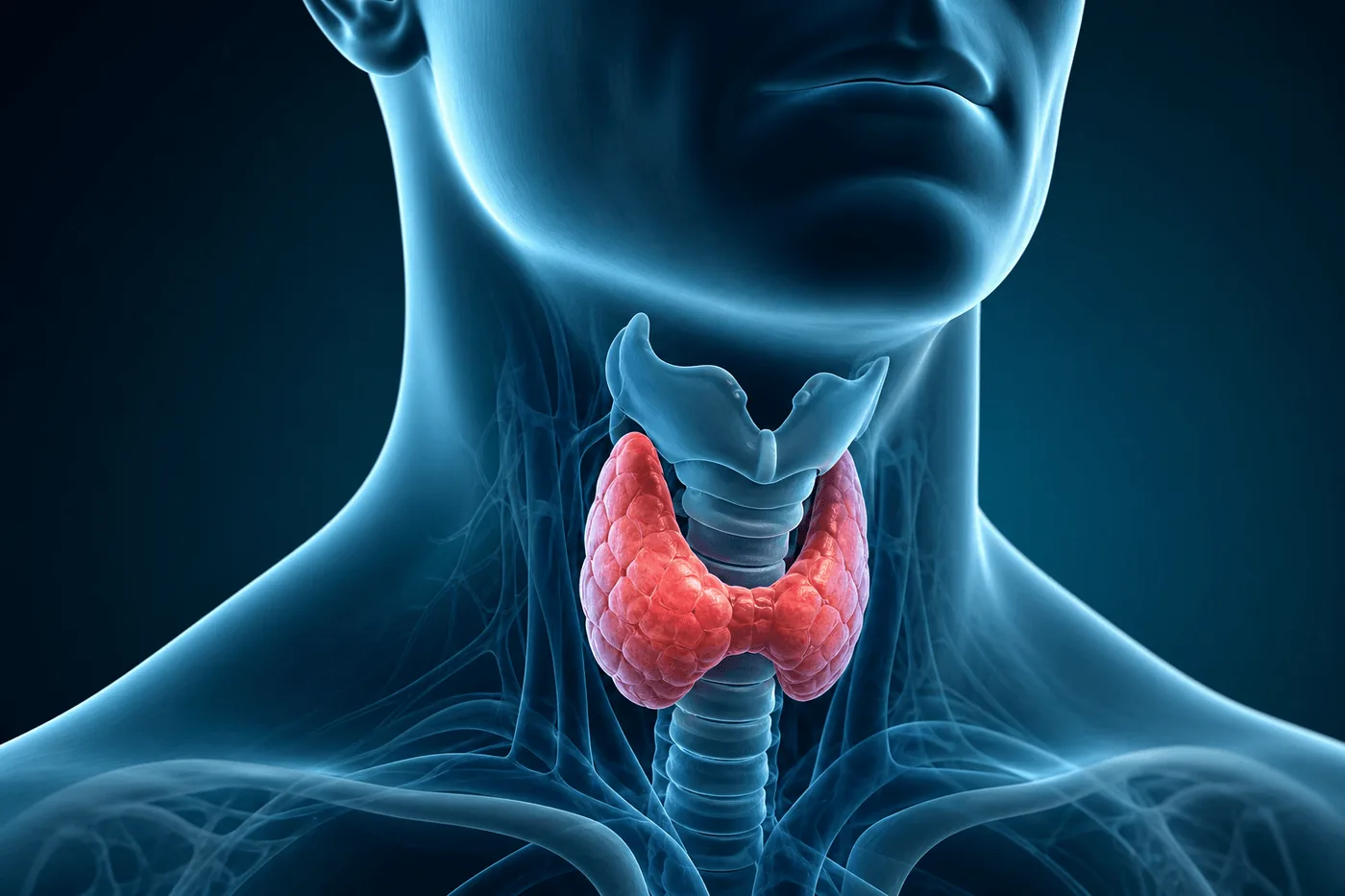
3D educational illustration: thyroid anatomy

How did treatment change?

These three shifts belong to different patient groups. Detailed cards are in the thyroid landmark atlas.

  1. Less treatment in low-risk disease

    In selected low-risk differentiated thyroid cancer, postoperative radioiodine moved from being considered mandatory to being comparable with observation (ESTIMABL2, IoN).

  2. Active surveillance in selected patients

    In very low-risk papillary microcarcinoma, regular ultrasound observation became an option instead of surgery when criteria are met (Kuma / Miyauchi cohort line).

  3. Molecularly targeted therapy in advanced disease

    MKIs in RAI-refractory differentiated disease; more selective targeted drugs in RET or BRAF niches. Medullary and anaplastic pathways are separate.

This summary is for patient education; individual treatment decisions depend on stage, pathology, imaging, and physician assessment.

Landmark status

Sorting

Topic filters

Showing 11 studies.

Comparison table

Select 2 or 3 studies to compare. Different endpoints are never combined in one chart.

Open this discovery in the “Discoveries That Changed Cancer Treatment” hub

Low-risk differentiated thyroid cancer · radioactive iodine (RAI)

Gold Star — Paradigm-Changing2022 / 2025Source verified

ESTIMABL2

Clinical impact score: Not scored

What changed? Supported with randomized non-inferiority that postoperative low-dose RAI is not mandatory in selected low-risk DTC; contributed to safely omitting RAI in suitable patients.

Before: In many centers, postoperative RAI was often used even in low risk. After: Surveillance without RAI as an option in defined low risk (patient selection critical).

Guideline: Read as aligned with the 2025 ATA framework that routine RAI is not recommended in low risk.

Proposed class: Gold Star · Approved class: Gold Star · Last reviewed: 2026-10-29

What did the researchers want to learn?

In low-risk thyroid cancer, is follow-up without giving radioactive iodine after surgery as safe as giving low-dose radioactive iodine?

Before

Postoperative radioactive iodine was often recommended in many low-risk patients.

Today

Surveillance without radioactive iodine became an option supported by randomized evidence in selected low-risk patients.

What did this study change?

In some patients with low-risk thyroid cancer, radioactive iodine treatment after surgery may not be necessary.

Benefit for patients

Some patients with low-risk thyroid cancer may not need radioactive iodine treatment after surgery.

What did the research find?

At three and five years, in the defined low-risk group, follow-up without radioactive iodine was not clearly worse than giving a low dose.

Who does this apply to?

Only for low risk similar to the study. It is not generalized to high-risk patients, to all thyroid cancers, or to every post-surgical situation.

What did it not prove?

Did not prove that omitting RAI is safe in all thyroid cancers, in high risk, or after every surgery; that the two approaches are fully equivalent on all clinical outcomes; or overall survival superiority.

This summary is not a treatment recommendation. Decisions depend on the type of disease, stage, general health, and your physician's assessment.

Why this study has a gold star: Strong randomized evidence that routine low-dose RAI is not mandatory in selected low-risk DTC; read in line with the 2025 ATA de-escalation framework. (NEJM 2022 · Lancet Diab Endo 2025 · gold-star approval 2026-10-29)

Low-risk differentiated thyroid cancer · radioactive iodine (RAI)

Under review for paradigm-changing status2025Source verified

IoN

Clinical impact score: Not scored

What changed? Supported RAI reduction in low risk in a UK population.

Before: Postoperative RAI was often the default option. After: Surveillance without RAI as an option in criteria-eligible patients.

Guideline: Read together with the 2025 ATA low-risk RAI framework.

Proposed class: Gold Star · Approved class: Milestone · Last reviewed: 2026-10-29

What did the researchers want to learn?

In selected low-risk thyroid cancer, is follow-up without giving radioactive iodine worse than giving it in terms of the disease coming back?

Before

Postoperative radioactive iodine was often accepted as routine for many patients.

Today

Additional randomized support emerged for surveillance without radioactive iodine in selected low-risk patients.

What did this study change?

The decision to reduce radioactive iodine in suitable low-risk patients is strengthened.

Benefit for patients

At five years, in the patients defined in the study, follow-up without radioactive iodine was not clearly worse than giving it.

Who does this apply to?

It is not carried over to patients who do not meet the study criteria. With ESTIMABL2 it cannot be said 'no radioactive iodine (RAI) for everyone'.

What did it not prove?

Did not prove that a no-radioactive-iodine approach is safe in all patients or in high risk.

This summary is not a treatment recommendation. Decisions depend on the type of disease, stage, general health, and your physician's assessment.

Open this discovery in the “Discoveries That Changed Cancer Treatment” hub

Papillary microcarcinoma · active surveillance

Gold Star — Paradigm-Changing1993–2023+Source verified

Kuma / Miyauchi aktif izlem

Clinical impact score: Not scored

What changed? Made active surveillance a legitimate clinical option in selected papillary microcarcinoma.

Before: Immediate surgery for most microcarcinomas. After: Active surveillance as an option in criteria-eligible patients.

Guideline: 2025 ATA — active surveillance framework in selected low risk.

Proposed class: Gold Star · Approved class: Gold Star · Last reviewed: 2026-10-29

What did the researchers want to learn?

In very small, low-risk papillary thyroid cancer, is regular ultrasound follow-up instead of immediate surgery a safe option?

Before

Immediate surgery was often preferred even in papillary microcarcinoma.

Today

Active surveillance with regular ultrasound is discussed in selected patients; surgery is used if needed.

What did this study change?

Active surveillance is discussed in suitable low-risk microcarcinoma.

Benefit for patients

In selected patients, over ten years marked tumor growth was seen in about 5 of every hundred patients and new lymph node involvement in about 1; no death from the disease was reported. In some, surgery was performed when growth occurred. It is not a randomized comparative study.

Who does this apply to?

Only selected small, low-risk papillary microcarcinoma. It is not generalized to all papillary cancers.

What did it not prove?

Did not prove that active surveillance is superior/equivalent to surgery for all papillary cancers or in a randomized comparison.

This summary is not a treatment recommendation. Decisions depend on the type of disease, stage, general health, and your physician's assessment.

Why this study has a gold star: Foundational observational evidence line that made active surveillance a clinical option in suitable microcarcinoma; read as aligned with 2025 ATA. (Kuma/Miyauchi serileri · gold-star approval 2026-10-29)

Open this discovery in the “Discoveries That Changed Cancer Treatment” hub

Radioactive iodine-refractory differentiated thyroid cancer · multikinase inhibitor (MKI)

Gold Star — Paradigm-Changing2015Source verified

SELECT

Clinical impact score: Not scored

What changed? Established the lenvatinib PFS standard in RAI-refractory DTC.

Before: Limited systemic options. After: Lenvatinib is discussed in suitable patients.

Guideline: Systemic treatment context for RAI-R DTC in international guidelines.

Proposed class: Gold Star · Approved class: Gold Star · Last reviewed: 2026-10-29

What did the researchers want to learn?

In thyroid cancer resistant to radioactive iodine, does lenvatinib delay progression of the disease?

Before

Effective approved options in advanced RAI-refractory DTC were limited.

Today

Lenvatinib became one of the core drugs discussed in this group.

What did this study change?

Lenvatinib became established as an option in suitable radioactive iodine-refractory (RAI-refractory) differentiated disease.

Benefit for patients

In the lenvatinib arm, the time before the disease progressed was clearly prolonged. It is not a study of medullary or anaplastic cancer.

Who does this apply to?

Only for RAI-refractory progressive differentiated thyroid cancer (DTC). It is not carried over to low-risk localized disease.

What did it not prove?

Did not prove lenvatinib’s place in medullary/anaplastic cancer or early localized disease; did not show it is without toxicity.

This summary is not a treatment recommendation. Decisions depend on the type of disease, stage, general health, and your physician's assessment.

Why this study has a gold star: Foundational phase III that established the systemic MKI standard in RAI-refractory DTC. (NEJM 2015 · gold-star approval 2026-10-29)

Radioactive iodine-refractory differentiated thyroid cancer · multikinase inhibitor (MKI)

Foundational Evidence2014Source verified

DECISION

Clinical impact score: Not scored

What changed? Provided sorafenib PFS evidence in RAI-R DTC.

Before: Limited systemic option. After: Positioned among MKI options.

Guideline: Guideline context for systemic treatment of RAI-R DTC.

Proposed class: Foundational · Approved class: Not yet · Last reviewed: 2026-10-29

What did the researchers want to learn?

In thyroid cancer resistant to radioactive iodine, does sorafenib delay progression?

Before

Systemic options were very limited.

Today

Sorafenib became early MKI evidence discussed in this group.

What did this study change?

Sorafenib emerged as an option in RAI-refractory differentiated disease.

Benefit for patients

Progression was delayed in the sorafenib arm. Side effects may be frequent.

Who does this apply to?

RAI-refractory progressive differentiated thyroid cancer (DTC). It is not carried over to localized low risk.

What did it not prove?

Did not prove superior OS or use without toxicity.

This summary is not a treatment recommendation. Decisions depend on the type of disease, stage, general health, and your physician's assessment.

Previously treated RAI-refractory differentiated thyroid cancer (DTC) · cabozantinib

Clinical Milestone2021Source verified

COSMIC-311

Clinical impact score: Not scored

What changed? Added a cabozantinib line in previously treated RAI-R DTC.

Before: Limited subsequent line. After: Cabozantinib as an option in selected patients.

Guideline: Guideline context for subsequent-line RAI-R DTC.

Proposed class: Milestone · Approved class: Milestone · Last reviewed: 2026-10-29

What did the researchers want to learn?

In previously drug-treated thyroid cancer resistant to radioactive iodine, does cabozantinib delay progression?

Before

Second-/third-line options were limited.

Today

Cabozantinib became an evidence-based option in this line.

What did this study change?

Cabozantinib is discussed in selected previously treated RAI-refractory DTC.

Benefit for patients

In the cabozantinib arm, the median time before the disease progressed was prolonged to about 11 months vs 1.9 months. It is not EXAM (medullary).

Who does this apply to?

Previously treated RAI-refractory DTC. Medullary thyroid cancer (MTC) is separate.

What did it not prove?

Did not prove first-line superiority or the same result in MTC.

This summary is not a treatment recommendation. Decisions depend on the type of disease, stage, general health, and your physician's assessment.

RET-altered thyroid cancer · selpercatinib

Clinical Milestone2020+Source verified

LIBRETTO-001

Clinical impact score: Not scored

What changed? Selpercatinib response evidence in RET-altered thyroid cancer.

Before: MKI / limited options. After: RET testing + selective inhibitor option.

Guideline: Guideline context for molecularly targeted therapy.

Proposed class: Milestone · Approved class: Milestone · Last reviewed: 2026-10-31

What did the researchers want to learn?

In thyroid cancer with a RET gene alteration, does selpercatinib shrink the tumor?

Before

RET-specific approved options were limited.

Today

Targeted therapy is discussed in RET-positive patients.

What did this study change?

RET testing and the selpercatinib option in suitable patients were strengthened.

Benefit for patients

In medullary thyroid cancer the response rate was about 69–73%; in previously treated differentiated cancer with a RET fusion about 79% was reported. It is not randomized comparative; the cohorts are read separately.

Who does this apply to?

This card cannot be relied upon if there is no RET alteration. Superiority cannot be inferred from a single-arm result.

What did it not prove?

This card alone does not prove survival or progression superiority in a randomized comparison (LIBRETTO-531 is separate for MTC).

This summary is not a treatment recommendation. Decisions depend on the type of disease, stage, general health, and your physician's assessment.

Open this discovery in the “Discoveries That Changed Cancer Treatment” hub

Anaplastic thyroid cancer · BRAF/MEK

Gold Star — Paradigm-Changing2018+Source verified

ROAR

Clinical impact score: Not scored

What changed? Targeted combination option in BRAF V600E ATC.

Before: Limited ATC systemic options. After: BRAF/MEK discussed in mutation-positive ATC.

Guideline: Guideline context for molecular treatment of ATC.

Proposed class: Gold Star · Approved class: Gold Star · Last reviewed: 2026-10-31

What did the researchers want to learn?

In anaplastic thyroid cancer with a BRAF V600E mutation, does dabrafenib + trametinib work?

Before

Effective systemic options in ATC were very limited.

Today

Dabrafenib+trametinib became an option in mutation-positive ATC.

What did this study change?

A molecularly targeted combination is discussed in BRAF V600E anaplastic thyroid cancer (ATC).

Benefit for patients

In the updated cohort, a tumor response was seen in about 56 of every hundred patients; a median survival of about 14.5 months was reported. It is not a papillary or medullary study.

Who does this apply to?

Only for BRAF V600E anaplastic. It is not generalized to differentiated or medullary.

What did it not prove?

Did not prove randomized survival superiority or benefit in BRAF-negative ATC.

This summary is not a treatment recommendation. Decisions depend on the type of disease, stage, general health, and your physician's assessment.

Why this study has a gold star: Made a targeted combination a clinical option in selected BRAF V600E ATC. (ROAR ATC kohort · gold-star approval 2026-10-29)

Open this discovery in the “Discoveries That Changed Cancer Treatment” hub

RET-mutant medullary thyroid cancer · selpercatinib

Gold Star — Paradigm-Changing2023Source verified

LIBRETTO-531

Clinical impact score: Not scored

What changed? Positioned selpercatinib with superior PFS versus MKI in RET-mutant MTC.

Before: Cabozantinib / vandetanib. After: Selpercatinib comes to the fore in RET-mutant MTC.

Guideline: Guideline context for molecular treatment of MTC.

Proposed class: Gold Star · Approved class: Gold Star · Last reviewed: 2026-10-29

What did the researchers want to learn?

In RET-mutant medullary thyroid cancer, does selpercatinib delay progression of the disease better than older multi-targeted drugs?

Before

Cabozantinib/vandetanib were the main MKI options in MTC.

Today

Selpercatinib is discussed with comparative superiority in RET-mutant MTC.

What did this study change?

First-line selpercatinib was strengthened in suitable RET-mutant medullary thyroid cancer (MTC).

Benefit for patients

In this study, progression was clearly later in the selpercatinib arm. It is not the same card as papillary RET fusion.

Who does this apply to?

Only for RET-mutant medullary. It is not carried over to RET-fusion differentiated or anaplastic thyroid cancer (ATC).

What did it not prove?

Did not prove the same result for RET-negative MTC or differentiated thyroid cancer.

This summary is not a treatment recommendation. Decisions depend on the type of disease, stage, general health, and your physician's assessment.

Why this study has a gold star: Phase III that comparatively elevated a selective RET inhibitor in RET-mutant MTC. (NEJM 2023 · gold-star approval 2026-10-29)

Advanced medullary thyroid cancer · cabozantinib

Foundational Evidence2013Source verified

EXAM

Clinical impact score: Not scored

What changed? Cabozantinib PFS evidence in advanced MTC.

Before: Limited systemic option. After: MKI option in MTC; updated in the RET niche by LIBRETTO-531.

Guideline: Systemic treatment context for MTC.

Proposed class: Foundational · Approved class: Not yet · Last reviewed: 2026-10-29

What did the researchers want to learn?

In advanced medullary thyroid cancer, does cabozantinib delay progression?

Before

Systemic options in advanced MTC were limited.

Today

Cabozantinib became an evidence-based MKI in MTC.

What did this study change?

Cabozantinib became an option in advanced medullary thyroid cancer (MTC).

Benefit for patients

Progression was delayed in the cabozantinib arm. It is not a radioactive iodine-refractory papillary study.

Who does this apply to?

MTC. RAI-refractory differentiated thyroid cancer (DTC) (COSMIC-311) is separate.

What did it not prove?

Did not prove superiority over a RET-selective inhibitor (LIBRETTO-531 separate).

This summary is not a treatment recommendation. Decisions depend on the type of disease, stage, general health, and your physician's assessment.

Advanced medullary thyroid cancer · vandetanib

Foundational Evidence2012Source verified

ZETA

Clinical impact score: Not scored

What changed? Vandetanib PFS evidence in advanced MTC.

Before: Limited systemic option. After: Among MTC MKI options.

Guideline: Systemic treatment context for MTC.

Proposed class: Foundational · Approved class: Not yet · Last reviewed: 2026-10-29

What did the researchers want to learn?

In advanced medullary thyroid cancer, does vandetanib delay progression?

Before

Systemic options were limited.

Today

Vandetanib became an evidence-based option in MTC.

What did this study change?

Vandetanib became an option in advanced medullary thyroid cancer (MTC).

Benefit for patients

Progression was delayed in the vandetanib arm. Additional monitoring may be needed with regard to heart rhythm.

Who does this apply to?

MTC. It is not differentiated RAI-refractory.

What did it not prove?

Did not prove superiority over RET-selective therapy.

This summary is not a treatment recommendation. Decisions depend on the type of disease, stage, general health, and your physician's assessment.

Thyroid landmarks — when comparing

Are ESTIMABL2 and IoN the same?

No. Both support reducing RAI in low risk, but inclusion criteria (especially nodal status) and event definitions differ.

Is active surveillance for all papillary cancer?

No. Only selected low-risk microcarcinoma; cohort evidence is not presented as equivalent to an RCT.

Are SELECT / EXAM / LIBRETTO-531 mixed up?

No. SELECT RAI-R DTC; EXAM advanced MTC MKI; LIBRETTO-531 selective RET vs MKI in RET-mutant MTC.

Are RET fusion and RET mutation the same?

No. Fusion more often DTC; mutation in the MTC context. LIBRETTO-001 cohorts are read separately.

Medical editor's note

Each study was designed for a specific patient group, treatment arm, and primary endpoint. Results should not be automatically generalized to other diseases or to all patients. This atlas is educational and is not a treatment recommendation.

Evidence

Scientific sources

Show sources · 10

Thyroid landmark atlas: DTC≠MTC≠ATC. Low-risk RAI de-escalation, active surveillance cohorts, RAI-R DTC MKIs and RET/BRAF niches are read separately. Gold stars are not automatic.

  1. 2025 American Thyroid Association Management Guidelines for Adult Patients with Differentiated Thyroid CancerAmerican Thyroid Association (ATA) · 2025Open source
  2. ESTIMABL2 — Thyroidectomy without radioiodine in low-risk thyroid cancer (NEJM 2022; 5-year follow-up Lancet Diab Endo)NEJM / Lancet Diabetes & Endocrinology · 2022/2025 · DOI: 10.1056/NEJMoa2111953Open source
  3. ESTIMABL2 — 5-year follow-up without radioiodine in low-risk thyroid cancerLancet Diabetes & Endocrinology · 2025 · DOI: 10.1016/S2213-8587(24)00276-6Open source
  4. IoN — Thyroidectomy with or without postoperative radioiodine for low-risk DTC (UK)The Lancet · 2025 · DOI: 10.1016/S0140-6736(25)00629-4Open source
  5. SELECT — Lenvatinib in radioiodine-refractory thyroid cancerNEJM · 2015 · DOI: 10.1056/NEJMoa1406470Open source
  6. DECISION — Sorafenib in radioiodine-refractory thyroid cancerThe Lancet · 2014 · DOI: 10.1016/S0140-6736(14)60821-9Open source
  7. COSMIC-311 — Cabozantinib in previously treated RAI-refractory DTCLancet Oncology · 2021 · DOI: 10.1016/S1470-2045(21)00332-6Open source
  8. LIBRETTO-531 — Selpercatinib vs cabozantinib/vandetanib in RET-mutant MTCNEJM · 2023 · DOI: 10.1056/NEJMoa2309719Open source
  9. EXAM — Cabozantinib in progressive medullary thyroid cancerJCO · 2013Open source
  10. ZETA — Vandetanib in advanced medullary thyroid cancerJCO · 2012Open source

Source list last checked: 31 October 2026. (Page content review date may appear separately above.)