Disease-specific landmark atlas · Liver (HCC)

Liver Cancer (HCC) Landmark Atlas

Landmark studies in hepatocellular carcinoma: early-stage resection and ablation, TACE, first- and second-line systemic therapy, and adjuvant trials (SURF, SHARP, IMbrave150, HIMALAYA, CheckMate-9DW, EMERALD-1, IMbrave050 and others).

DFS, OS, pCR, cCR, and similar endpoints are not interchangeable. Gold stars are never assigned automatically. Numeric cards are verified summaries of primary publications. A patient summary is not a treatment recommendation.

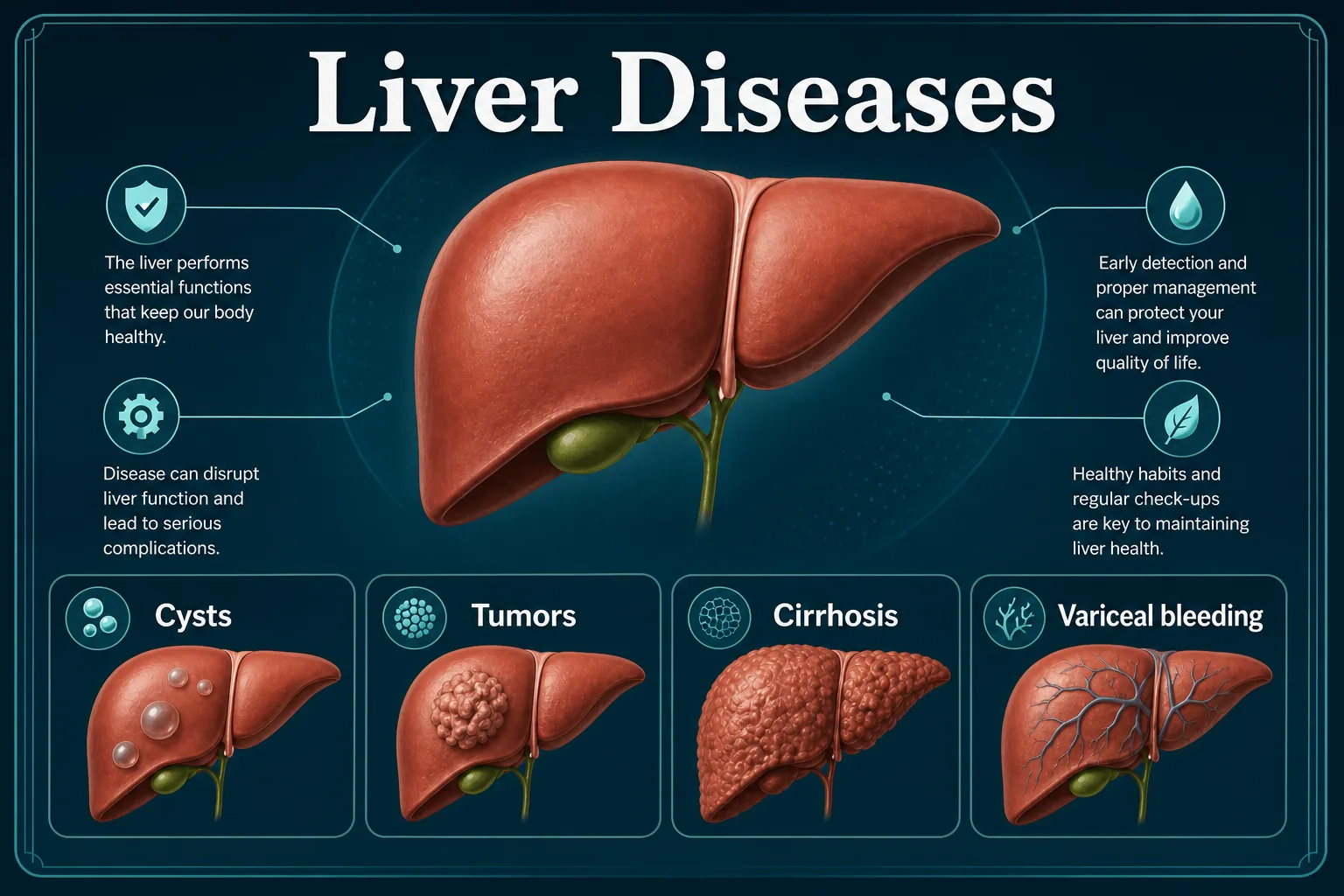
3D educational illustration: liver anatomy

How did treatment change?

In advanced liver cancer (HCC), systemic therapy has shifted from a single-agent era toward immune combinations.

  1. Previous approach

    Options in advanced HCC were limited; sorafenib was long accepted as the main reference.

  2. New clinical evidence

    Atezolizumab–bevacizumab and other immune-combination / TKI studies rewrote the first-line standard.

  3. Current approach

    Systemic therapy is considered together with local ablative / surgical options by liver reserve, portal hypertension, BCLC stage, and prior treatments.

This summary is for patient education; individual treatment decisions depend on stage, pathology, imaging, and physician assessment.

Landmark status

Sorting

Topic filters

Showing 15 studies.

Comparison table

Select 2 or 3 studies to compare. Different endpoints are never combined in one chart.

Small liver cancer (HCC) · surgery or heat ablation

Emerging Evidence2025Source verified

SURF-RCT

What did the researchers want to learn?

In selected small liver cancer (3 cm or less, at most 3 nodules), is surgical removal superior to radiofrequency ablation (burning with heat) in terms of survival or recurrence-free time?

Before

Comparison of resection versus ablation in early HCC was under discussion.

Today

In selected small tumors, both local methods are discussed; choice depends on anatomy and the team.

What did this study change?

In selected small liver cancer, surgery could not be shown to be superior to ablation; the choice of treatment depends on tumor location, liver reserve and the patient's condition.

Benefit for patients

Relevant to patients with early-stage HCC.

What did the research find?

The five-year survival rate was 74.6% with surgery and 70.4% with radiofrequency ablation; the five-year recurrence-free survival rate was 42.9% and 42.7%. No significant difference was shown on either measure; that is, superiority could not be proven. This result does not mean equivalence in every patient group.

Who does this apply to?

It does not prove that the two treatments are equivalent in all patient groups; it should not be generalized beyond the study selection criteria.

What did it not prove?

Does not cover advanced disease or systemic therapy.

This summary is not a treatment recommendation. Decisions depend on the type of disease, stage, general health, and your physician's assessment.

Liver cancer (HCC) · sorafenib after curative treatment

Emerging Evidence2015Source verified

STORM

What did the researchers want to learn?

In liver cancer, does giving sorafenib after surgery or ablation prolong the time before the cancer comes back?

Before

Adjuvant sorafenib after resection was hoped for.

Today

Adjuvant sorafenib showed no DFS/OS benefit; it is not used routinely.

What did this study change?

It did not support routine sorafenib use after curative-intent treatment.

Benefit for patients

Relevant to patients operated for HCC.

What did the research find?

Median time before the cancer came back was 33.3 months and 33.7 months (hazard ratio 0.940); no significant benefit could be shown, that is, the main goal of the study was not met.

Who does this apply to?

Efficacy seen in advanced-stage disease cannot be automatically transferred to use after surgery.

What did it not prove?

Does not erase sorafenib’s historical first-line role in advanced disease.

This summary is not a treatment recommendation. Decisions depend on the type of disease, stage, general health, and your physician's assessment.

Liver cancer (HCC) · atezolizumab + bevacizumab after curative treatment

Emerging Evidence2023 ara → 2026 updateSource verified

IMbrave050

What did the researchers want to learn?

In liver cancer, does atezolizumab + bevacizumab after surgery or ablation prolong the time before the cancer comes back, and does this benefit persist with long follow-up?

Before

Adjuvant atezolizumab–bevacizumab after high-risk resection/ablation was being studied.

Today

Early DFS signals are discussed; mature OS and selection criteria matter.

What did this study change?

Current evidence does not support routine use of atezolizumab + bevacizumab after surgery or ablation.

Benefit for patients

Relevant to patients with high-risk early HCC.

What did the research find?

A positive result was seen in the first interim analysis (hazard ratio 0.72; p=0.012). However, in the 2026 updated analysis the hazard ratio was 0.90 (95% confidence interval 0.72–1.12); the initial benefit was not maintained. Survival data are not mature.

Who does this apply to?

The first positive interim analysis does not substitute for a benefit that was not maintained at long follow-up. Subgroup signals must be confirmed in separate studies.

What did it not prove?

Not the same question as advanced-disease IMbrave150.

This summary is not a treatment recommendation. Decisions depend on the type of disease, stage, general health, and your physician's assessment.

Liver cancer (HCC) · advanced stage

Foundational Evidence2008Source verified

SHARP

What did the researchers want to learn?

In advanced liver cancer that cannot be removed by surgery, does sorafenib prolong survival compared with placebo?

Before

There was no effective systemic therapy in advanced HCC.

Today

Sorafenib established the first systemic standard in advanced HCC.

What did this study change?

It opened the era of systemic treatment in advanced HCC; later drugs built on this foundation.

Benefit for patients

Relevant to patients with advanced/unresectable HCC.

What did the research find?

Sorafenib prolonged survival compared with placebo. This is a historic milestone showing that systemic treatment can work in HCC (hepatocellular carcinoma).

Who does this apply to?

For advanced HCC meeting the selection criteria of that era. It does not replace today's immunotherapy era; median times should not be compared directly with modern studies.

What did it not prove?

Does not by itself define the current atezolizumab–bevacizumab or dual-IO era.

This summary is not a treatment recommendation. Decisions depend on the type of disease, stage, general health, and your physician's assessment.

Advanced liver cancer (HCC) · Asia-Pacific · sorafenib

Foundational Evidence2009Source verified

Asia-Pacific

What did the researchers want to learn?

Is the survival benefit of sorafenib also confirmed in patients with advanced liver cancer in the Asia-Pacific region?

Before

Sorafenib was being confirmed in an Asian population.

Today

Sorafenib benefit in advanced HCC was supported in an additional population.

What did this study change?

It supported the survival benefit of sorafenib in patients with different geographic and clinical characteristics.

Benefit for patients

Relevant to patients with advanced HCC.

What did the research find?

Median survival was 6.5 months with sorafenib and 4.2 months in the placebo group (hazard ratio 0.68).

Who does this apply to?

The patient group and the course of the disease differ from the SHARP study; median times from different studies should not be used directly to compare the efficacy of treatments.

What did it not prove?

Does not claim to replace modern IO combinations.

This summary is not a treatment recommendation. Decisions depend on the type of disease, stage, general health, and your physician's assessment.

Advanced liver cancer (HCC) · lenvatinib versus sorafenib

Foundational Evidence2018Source verified

REFLECT

What did the researchers want to learn?

In advanced liver cancer, does lenvatinib show that it is not worse than sorafenib in terms of survival?

Before

First-line TKI options were limited.

Today

Lenvatinib became an alternative to sorafenib in selected advanced HCC.

What did this study change?

Lenvatinib became one of the first-line alternatives in suitable advanced-stage liver cancer.

Benefit for patients

Relevant to patients with advanced HCC.

What did the research find?

Median survival was 13.6 months with lenvatinib and 12.3 months with sorafenib (hazard ratio 0.92); lenvatinib was shown not to be worse in terms of survival.

Who does this apply to?

Because of exclusion criteria such as main portal vein involvement, tumor in more than half of the liver and bile duct involvement, generalization to these patients is limited.

What did it not prove?

Does not prove superiority over IO combinations or generalization to Child-Pugh B.

This summary is not a treatment recommendation. Decisions depend on the type of disease, stage, general health, and your physician's assessment.

Open this discovery in the “Discoveries That Changed Cancer Treatment” hub

Liver cancer (HCC) · advanced-stage systemic treatment

Gold Star — Paradigm-Changing2020 (+ updated OS)Source verified

IMbrave150

What did the researchers want to learn?

In advanced liver cancer that cannot be removed by surgery, does atezolizumab plus bevacizumab prolong survival compared with sorafenib?

Before

Sorafenib was a common 1L option in advanced unresectable HCC.

Today

In suitable patients, atezo+bev became one of the main 1L options.

What did this study change?

It became one of the main first-line systemic treatment options for many suitable patients with advanced HCC.

Benefit for patients

Relevant to the first-line atezolizumab–bevacizumab decision in advanced HCC.

What did the research find?

Overall survival (OS) and progression-free survival (PFS) improved (updated median OS 19.2 vs 13.4 months; hazard ratio [HR] 0.66). Bevacizumab is not suitable for every patient because of bleeding / varices risk; Child-Pugh A liver function and a suitable performance status are typical.

Who does this apply to?

For unresectable HCC with no prior systemic therapy; variceal screening is critical. No head-to-head superiority claim is made over other first-line immunotherapy regimens.

What did it not prove?

Safe use in all Child-Pugh classes or every patient at high variceal/bleeding risk; head-to-head superiority over other 1L IO regimens.

This summary is not a treatment recommendation. Decisions depend on the type of disease, stage, general health, and your physician's assessment.

Why this study has a gold star: Helped make IO + anti-VEGF an important first-line option in advanced HCC. (2020 updated OS / editorial 2026-11)

Advanced liver cancer (HCC) · tremelimumab + durvalumab

Foundational Evidence2022Source verified

HIMALAYA

What did the researchers want to learn?

In advanced or inoperable liver cancer, does a single dose of tremelimumab plus durvalumab (STRIDE) prolong survival compared with sorafenib?

Before

Sorafenib was the 1L reference; STRIDE did not exist.

Today

In suitable patients, STRIDE became one of the 1L options.

What did this study change?

Using two immunotherapy drugs together created another first-line option in advanced liver cancer.

Benefit for patients

Relevant to the STRIDE (durvalumab+tremelimumab) option in advanced HCC.

What did the research find?

STRIDE median overall survival (OS) 16.4 vs 13.8 months (hazard ratio [HR] 0.78). No head-to-head superiority over atezolizumab + bevacizumab was shown.

Who does this apply to?

Superiority cannot be inferred directly versus IMbrave150 / CheckMate-9DW.

What did it not prove?

This study did not directly show that the STRIDE regimen is superior to atezolizumab–bevacizumab.

This summary is not a treatment recommendation. Decisions depend on the type of disease, stage, general health, and your physician's assessment.

Advanced liver cancer (HCC) · nivolumab + ipilimumab

Foundational Evidence2025Source verified

CheckMate-9DW

What did the researchers want to learn?

In previously untreated, inoperable liver cancer, does nivolumab + ipilimumab prolong survival compared with lenvatinib or sorafenib?

Before

At 1L, TKIs (lenvatinib/sorafenib) or other IO regimens were discussed; no 1L nivo+ipi approval.

Today

1L nivo+ipi was approved in the US (April 2025); access is country-specific.

What did this study change?

It supported the first-line efficacy of dual immunotherapy; there is US approval.

Benefit for patients

Relevant to the first-line nivolumab+ipilimumab option in advanced HCC.

What did the research find?

Median overall survival (OS) 23.7 vs 20.6 months (hazard ratio [HR] 0.79). Serious immune-related side effects and liver / general condition are evaluated together. US FDA April 2025; EMA / Turkey are separate.

Who does this apply to?

Child-Pugh A; no ranking against other first-line immunotherapies; licensing in Turkey is not automatically equivalent.

What did it not prove?

Head-to-head superiority over IMbrave150 / HIMALAYA; Child-Pugh B/C generalization; automatic equivalence of Turkey labeling.

This summary is not a treatment recommendation. Decisions depend on the type of disease, stage, general health, and your physician's assessment.

Intermediate-stage liver cancer (HCC) · embolization + durvalumab + bevacizumab

Emerging Evidence2025Source verified

EMERALD-1

What did the researchers want to learn?

Does adding durvalumab and bevacizumab to transarterial chemoembolization (TACE; blocking the vessel that feeds the tumor through a blood vessel) prolong the time before the disease progresses?

Before

In intermediate stage, TACE was a common local option; evidence for adding systemic therapy was limited.

Today

In selected patients, TACE + durvalumab + bevacizumab is discussed in a PFS context; OS is followed separately.

What did this study change?

It showed that TACE plus a systemic combination can improve disease control.

Benefit for patients

Relevant to the decision to add systemic therapy in TACE-candidate intermediate-stage HCC.

What did the research find?

The median time before the disease progressed (progression-free survival) was 15.0 months vs 8.2 months. This result does not mean that patients' total survival time (overall survival) was also definitely prolonged.

Who does this apply to?

Prolongation of progression-free survival does not mean prolongation of overall survival. Bleeding / toxicity and patient selection are critical.

What did it not prove?

Proven overall survival superiority; mandatory TACE+IO in all intermediate-stage HCC.

This summary is not a treatment recommendation. Decisions depend on the type of disease, stage, general health, and your physician's assessment.

Intermediate-stage liver cancer (HCC) · embolization + lenvatinib + pembrolizumab

Emerging Evidence2025Source verified

LEAP-012

What did the researchers want to learn?

Does adding lenvatinib and pembrolizumab to transarterial chemoembolization (TACE; blocking the vessel that feeds the tumor through a blood vessel) prolong the time before the disease progresses?

Before

TACE + lenvatinib ± pembrolizumab combinations were being evaluated.

Today

Combination strategies are studied in selected intermediate HCC; there is no single standard path.

What did this study change?

It showed the potential of combining local and systemic treatment in intermediate-stage patients who are candidates for embolization; a survival benefit has not yet been proven.

Benefit for patients

Relevant to TACE-candidate HCC patients.

What did the research find?

The median time before the disease progressed (progression-free survival) was 14.6 months and 10.0 months. Prolongation of the time before progression is not the same thing as prolongation of survival.

Who does this apply to?

Side effects and patient selection must be evaluated. A direct comparison in terms of survival with the EMERALD-1 study cannot be made.

What did it not prove?

Does not automatically change first-line advanced-disease regimens.

This summary is not a treatment recommendation. Decisions depend on the type of disease, stage, general health, and your physician's assessment.

Advanced liver cancer (HCC) · second-line regorafenib after sorafenib

Foundational Evidence2017Source verified

RESORCE

What did the researchers want to learn?

In liver cancer that has progressed after sorafenib, does regorafenib prolong survival?

Before

Second-line options after sorafenib were limited.

Today

Regorafenib became an option in selected second-line settings.

What did this study change?

It showed a survival benefit in the second line after sorafenib.

Benefit for patients

Relevant to patients with advanced HCC previously treated with sorafenib.

What did the research find?

Median survival was 10.6 months with regorafenib and 7.8 months in the placebo group (hazard ratio 0.63).

Who does this apply to?

It cannot be generalized to all patients who cannot tolerate sorafenib; it applies only to selected patients who have tolerated sorafenib.

What did it not prove?

Does not transfer one-to-one to the first-line IO era.

This summary is not a treatment recommendation. Decisions depend on the type of disease, stage, general health, and your physician's assessment.

Advanced liver cancer (HCC) · previously treated · cabozantinib

Foundational Evidence2018Source verified

CELESTIAL

What did the researchers want to learn?

In previously treated advanced liver cancer, does cabozantinib prolong survival?

Before

There was a need for second-/third-line TKIs.

Today

Cabozantinib provided an option in previously treated advanced HCC.

What did this study change?

It provided an additional targeted-therapy option in previously treated advanced liver cancer.

Benefit for patients

Relevant to patients with previously treated advanced HCC.

What did the research find?

Median survival was 10.2 months with cabozantinib and 8.0 months in the placebo group (hazard ratio 0.76).

Who does this apply to?

The patient group and treatment line are not exactly the same as in RESORCE; the two studies cannot be compared directly.

What did it not prove?

Does not replace first-line atezo-bev.

This summary is not a treatment recommendation. Decisions depend on the type of disease, stage, general health, and your physician's assessment.

Inoperable liver cancer (HCC) · embolization / chemoembolization

Foundational Evidence2002Source verified

Llovet 2002 (TACE)

What did the researchers want to learn?

In liver cancer that cannot be operated on, does blocking the vessel that feeds the tumor through a blood vessel (embolization) or blocking it with drugs (chemoembolization) prolong survival compared with symptom treatment alone?

Before

Resection indications in early HCC were becoming clearer.

Today

Surgical selection criteria formed a foundation of modern HCC management.

What did this study change?

It supported chemoembolization being one of the core treatments in selected inoperable liver cancer.

Benefit for patients

Relevant to early HCC surgical candidates.

What did the research find?

The study was stopped early because a survival benefit was seen. Two years later, the survival rate was 63% with chemoembolization and 27% in the control group.

Who does this apply to?

Belongs to the era before modern immunotherapy and combination treatments. It does not examine the same question as EMERALD-1 and LEAP-012.

What did it not prove?

Does not cover the systemic IO era.

This summary is not a treatment recommendation. Decisions depend on the type of disease, stage, general health, and your physician's assessment.

Liver cancer (HCC) suitable for embolization · drug-eluting beads versus conventional chemoembolization

Emerging Evidence2010Source verified

PRECISION V

What did the researchers want to learn?

Is embolization with drug-eluting beads (DEB-TACE) superior to conventional chemoembolization (cTACE) in tumor response?

Before

TACE techniques and drug-eluting bead comparisons were being done.

Today

Technical choices affect the local treatment plan; claims of oncologic superiority are limited.

What did this study change?

It suggested that DEB-TACE may have some safety and tolerability advantages; it cannot be said to be more effective in all patients.

Benefit for patients

Relevant to HCC patients planned for TACE.

What did the research find?

At six months, complete response was about 27% and 22%, and overall response about 52% and 44%. The prespecified superiority criterion was not met; that is, the main goal of the study was not met.

Who does this apply to?

The main superiority goal was not met. It was conducted in a context before the modern era of systemic treatment.

What did it not prove?

Does not alone determine the systemic therapy decision.

This summary is not a treatment recommendation. Decisions depend on the type of disease, stage, general health, and your physician's assessment.

Atlas comparison guide

SURF — equivalence?

Absence of a significant OS/RFS difference does not mean resection and RFA are equivalent in all patients. Choice depends on tumor location, reserve, and patient status.

IMbrave050 — interim analysis vs 2026

The first interim analysis had RFS HR 0.72 (positive); in the 2026 update, benefit was not sustained with RFS HR 0.90. The current result takes precedence; routine adjuvant atezo+bev is not recommended.

IMbrave150 / HIMALAYA / CheckMate-9DW

All report OS benefit in first-line advanced HCC, but control arms and populations differ. No head-to-head superiority or indirect ranking.

EMERALD-1 / LEAP-012

PFS benefit is emphasized in TACE + systemic combinations. PFS is not proven OS superiority.

SHARP / Asia-Pacific

Different geographic populations; median OS values should not be used for a direct efficacy comparison.

Transplantation boxes

Milan and Metroticket 2.0 are patient-selection frameworks; they are not randomized landmark cards.

Medical editor's note

Each study was designed for a specific patient group, treatment arm, and primary endpoint. Results should not be automatically generalized to other diseases or to all patients. This atlas is educational and is not a treatment recommendation.

Evidence

Scientific sources

Show sources · 6

HCC landmark atlas: SURF, STORM, IMbrave050, SHARP, Asia-Pacific, REFLECT, IMbrave150, HIMALAYA, CheckMate-9DW, EMERALD-1, LEAP-012, RESORCE, CELESTIAL, Llovet 2002, PRECISION V. OS/PFS/RFS are not interchangeable; Milan/Metroticket are not RCTs; numeric cards live only on this page.

  1. Hepatocellular carcinoma: ESMO Clinical Practice Guidelines for diagnosis, treatment and follow-upESMO · 2025 / livingOpen source
  2. NCCN Clinical Practice Guidelines in Oncology: Hepatocellular CarcinomaNCCN · Current versionOpen source
  3. Atezolizumab plus Bevacizumab in Unresectable Hepatocellular Carcinoma (IMbrave150)New England Journal of Medicine · 2020 · DOI: 10.1056/NEJMoa1915745Open source
  4. Sorafenib in Advanced Hepatocellular Carcinoma (SHARP)New England Journal of Medicine · 2008 · DOI: 10.1056/NEJMoa0708857Open source
  5. Updated data from IMbrave050: Adjuvant atezolizumab plus bevacizumab for high-risk HCCJournal of Hepatology · 2026 · DOI: 10.1016/j.jhep.2026.01.006Open source
  6. ESMO Gastrointestinal Cancer GuidelinesESMO · Living / eUpdateOpen source

Source list last checked: 31 October 2026. (Page content review date may appear separately above.)