Disease-specific landmark atlas · Melanoma

Melanoma Landmark Atlas

Landmark atlas on completion lymph node dissection after sentinel biopsy, and on adjuvant and neoadjuvant immunotherapy.

DFS, OS, pCR, cCR, and similar endpoints are not interchangeable. Gold stars are never assigned automatically. Numeric cards are verified summaries of primary publications. A patient summary is not a treatment recommendation.

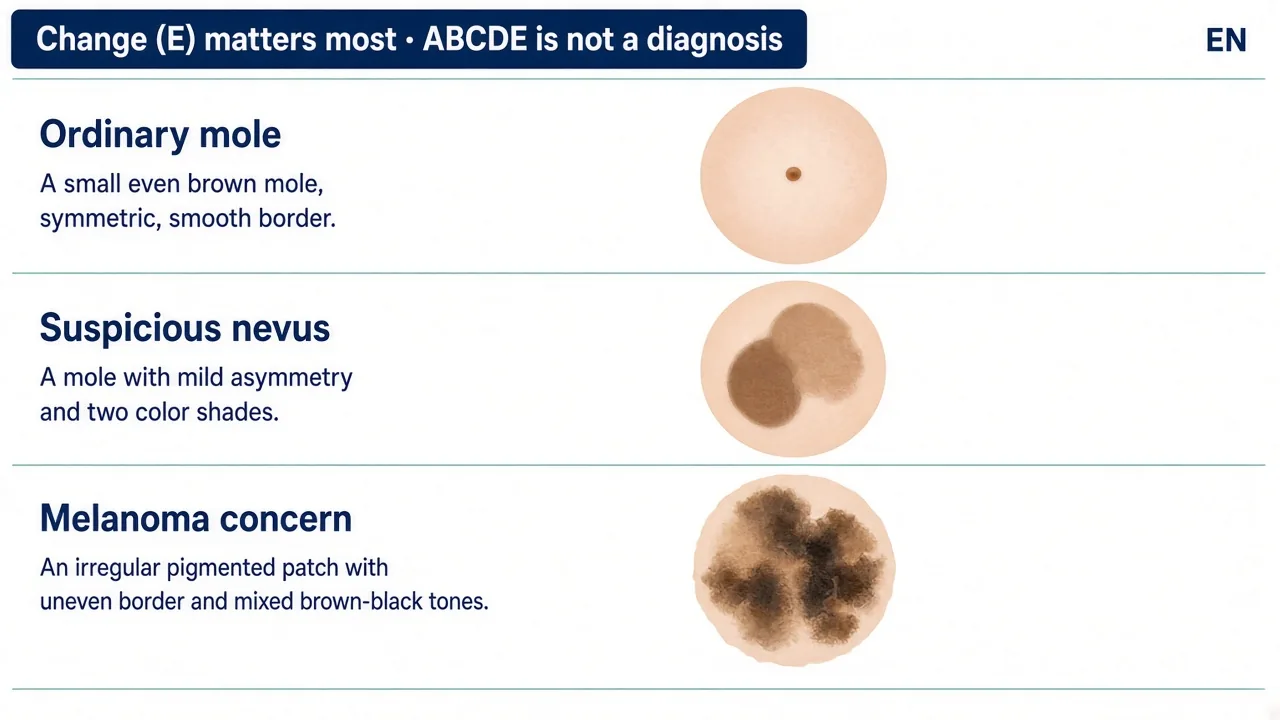
Educational illustration: pigmented lesion and suspected melanoma

How did treatment change?

In melanoma, adjuvant and neoadjuvant immune / targeted therapies after surgery have changed management of sentinel-positive and stage III disease.

  1. Previous approach

    In stage III disease, wider lymph-node dissection and limited effective adjuvant options were more common.

  2. New clinical evidence

    MSLT, CheckMate / KEYNOTE adjuvant studies, and BRAF-targeted regimens; neoadjuvant approaches in selected patients widened the discussion.

  3. Current approach

    Surgical extent and adjuvant / neoadjuvant systemic therapy are decided together by Breslow thickness, sentinel status, BRAF mutation, and risk group.

This summary is for patient education; individual treatment decisions depend on stage, pathology, imaging, and physician assessment.

Landmark status

Sorting

Topic filters

Showing 10 studies.

Comparison table

Select 2 or 3 studies to compare. Different endpoints are never combined in one chart.

Open this discovery in the “Discoveries That Changed Cancer Treatment” hub

Melanoma — sentinel node-positive

Gold Star — Paradigm-Changing2017Source verified

MSLT-II

What did the researchers want to learn?

In a suitable melanoma patient whose sentinel lymph node is positive, does immediate completion lymph node dissection reduce the risk of death from melanoma compared with close observation?

Before

Immediate completion (routine) lymph node dissection was often planned for sentinel-positive patients.

Today

In suitable patients, ultrasound surveillance is discussed; therapeutic dissection can be done for recurrence during surveillance or when clinically appropriate. Routine completion dissection is not automatic.

What did this study change?

In suitable sentinel-positive patients, close surveillance with ultrasound and, if needed, therapeutic dissection became widespread instead of routine completion dissection.

Benefit for patients

In selected patients, avoidance of unnecessary routine extensive dissection and lymphedema risk, without a shown loss of melanoma-related survival.

What did the research find?

At three years, melanoma-specific survival was the same in both groups (about 86%). Regional control was better in the dissection arm, but lymphedema was more frequent. The gain in regional control did not translate into a gain in melanoma-specific survival. Therapeutic dissection is not abandoned entirely.

Who does this apply to?

For suitable sentinel-positive patients. Therapeutic dissection for macroscopic nodal involvement or for recurrence during surveillance is a separate indication.

What did it not prove?

This study did not prove that every patient with a positive sentinel lymph node can be followed without surgery, or that lymph node surgery is never needed.

Evidence status: Current — does not support routine CLND; therapeutic dissection indication remains

This summary is not a treatment recommendation. Decisions depend on the type of disease, stage, general health, and your physician's assessment.

Why this study has a gold star: Randomized surgical evidence that supported withdrawing routine completion dissection in suitable sentinel-positive patients. Regional nodal control was better with dissection, but melanoma-specific survival remained equal — that distinction is the core clinical message. (2017 · editorial approval 2026-10)

Melanoma — sentinel node-positive (trunk / extremity)

Foundational Evidence2016 / final 2019Source verified

DeCOG-SLT

What did the researchers want to learn?

In melanoma with a positive sentinel lymph node, does completion lymph node dissection reduce distant spread compared with observation alone?

Before

Dissection was often preferred after a positive sentinel node.

Today

Surveillance and individualized decisions were strengthened together with MSLT-II.

What did this study change?

In line with MSLT-II, it is additional phase III evidence supporting withdrawal of routine completion dissection in selected patients.

Benefit for patients

In selected patients, avoidance of unnecessary dissection toxicity.

What did the research find?

At five years, the distant metastasis-free survival rate showed no significant difference between the two groups. Completion dissection increased the burden of side effects.

Who does this apply to?

For trunk and extremity sentinel-positive disease; head and neck are evaluated separately. It is not generalized to macroscopic lymph node disease. It is not an immunotherapy study.

What did it not prove?

Did not show superiority of dissection; not generalizable to macroscopic disease or the full spectrum of tumor burden.

Evidence status: Current — negative CLND evidence consistent with MSLT-II

This summary is not a treatment recommendation. Decisions depend on the type of disease, stage, general health, and your physician's assessment.

Open this discovery in the “Discoveries That Changed Cancer Treatment” hub

High-risk resected stage III melanoma

Gold Star — Paradigm-Changing2018 / 7y analizSource verified

KEYNOTE-054

What did the researchers want to learn?

In high-risk stage III melanoma that has been completely removed by surgery, does pembrolizumab delay the return of the disease and its distant spread?

Before

Effective and tolerable systemic adjuvant options after stage III disease were limited; toxic options such as high-dose interferon were discussed.

Today

In suitable patients, adjuvant pembrolizumab (PD-1) is frequently considered; the decision depends on multidisciplinary review and patient preference.

What did this study change?

In suitable high-risk stage III disease, adjuvant pembrolizumab became a widely used standard option.

Benefit for patients

Longer time without recurrence and without distant metastasis (RFS/DMFS).

What did the research find?

At seven years, the recurrence-free rate was 50% vs 36%; the distant-metastasis-free rate was 54% vs 42%. These are not overall survival.

Who does this apply to?

Completely resected high-risk stage III. Recurrence-free survival (RFS) and distant metastasis-free survival (DMFS) are not confused with overall survival (OS).

What did it not prove?

An RFS benefit does not mean overall survival is extended to the same degree in every patient.

Evidence status: Current — stage III adjuvant PD-1 (7y RFS/DMFS); OS not claimed in this row

This summary is not a treatment recommendation. Decisions depend on the type of disease, stage, general health, and your physician's assessment.

Why this study has a gold star: Pivotal randomized trial showing long-term recurrence-free and distant metastasis–free survival benefit of adjuvant pembrolizumab after complete resection of high-risk stage III disease; established the adjuvant PD-1 era. (7y EJC 2024 · editorial approval 2026-10)

Melanoma — resected stage IIIB–C or IV · after surgery

Foundational Evidence2017 / 5ySource verified

CheckMate 238

What did the researchers want to learn?

In completely resected high-risk melanoma, does nivolumab after surgery improve recurrence-free time compared with high-dose ipilimumab?

Before

Adjuvant high-dose ipilimumab was a toxic option.

Today

In suitable patients, adjuvant nivolumab (or pembrolizumab) comes to the fore.

What did this study change?

It strengthened the preferability of PD-1 therapy in the postoperative setting over high-dose ipilimumab (recurrence-free time and toxicity).

Benefit for patients

Better disease-free interval and fewer severe adverse events (without claiming OS superiority).

What did the research find?

At five years, the proportion remaining disease-free (recurrence-free) was 50% with nivolumab and 39% with ipilimumab. Overall survival rates were close and no significant superiority was shown. Severe side effects were fewer with nivolumab.

Who does this apply to?

For stage IIIB–C or completely resected stage IV. It is not the same question as stage II (KEYNOTE-716 / CheckMate 76K) or the placebo-controlled KEYNOTE-054. Immunotherapy side effects are monitored individually.

What did it not prove?

Did not show OS superiority. It is not the same question as KEYNOTE-054 versus placebo. Not generalizable to all melanoma stages.

Evidence status: Current — adjuvant PD-1 vs ipilimumab (RFS; OS NS)

This summary is not a treatment recommendation. Decisions depend on the type of disease, stage, general health, and your physician's assessment.

Melanoma — resected stage IIB/IIC · pembrolizumab after surgery

Foundational Evidence2022+Source verified

KEYNOTE-716

What did the researchers want to learn?

In lymph node-negative but high-risk (stage IIB/IIC) melanoma, does pembrolizumab after surgery reduce distant spread of the disease?

Before

Adjuvant systemic therapy was not routine in stage II disease.

Today

In high-risk IIB/IIC disease, adjuvant PD-1 is discussed as an individualized decision.

What did this study change?

It strengthened postoperative PD-1 therapy as an option in selected stage IIB/IIC patients.

Benefit for patients

Potential reduction in distant metastasis / recurrence risk.

What did the research find?

At about three years, the distant metastasis-free survival rate was about 84% with pembrolizumab and 75% with placebo. Recurrence-free time also favored pembrolizumab. These figures are not overall survival.

Who does this apply to?

Only for completely resected stage IIB/IIC. It is not confused with stage III (KEYNOTE-054 / CheckMate 238). Immunotherapy side effects and the individual balance of benefit and harm are important. An overall survival advantage is not claimed in this summary.

What did it not prove?

Did not prove that every stage II patient requires treatment. OS superiority is not claimed in this summary.

Evidence status: Current — stage IIB/IIC adjuvant PD-1

This summary is not a treatment recommendation. Decisions depend on the type of disease, stage, general health, and your physician's assessment.

Melanoma — resected stage IIB/IIC · nivolumab after surgery

Foundational Evidence2023+Source verified

CheckMate 76K

What did the researchers want to learn?

In completely resected stage IIB/IIC melanoma, does nivolumab after surgery reduce recurrence compared with placebo?

Before

Adjuvant PD-1 was not routine in stage II disease.

Today

In selected IIB/IIC disease, adjuvant nivolumab can be discussed.

What did this study change?

Together with KEYNOTE-716, it supports postoperative PD-1 options in selected stage IIB/IIC patients (the drug is nivolumab, not pembrolizumab).

Benefit for patients

Potential reduction in recurrence risk.

What did the research find?

At one year, the proportion remaining disease-free was 89% with nivolumab and 79% with placebo. In the four-year update the difference persisted. Overall survival data are not yet mature in this update.

Who does this apply to?

Only for stage IIB/IIC. It is not confused with stage III adjuvant studies or metastatic treatment. No exaggerated survival claim is made before overall survival matures. Immunotherapy side effects are monitored.

What did it not prove?

These results do not show that every low-risk melanoma patient needs postoperative immunotherapy.

Evidence status: Current — RFS; OS not mature

This summary is not a treatment recommendation. Decisions depend on the type of disease, stage, general health, and your physician's assessment.

Open this discovery in the “Discoveries That Changed Cancer Treatment” hub

Resectable stage III–IV melanoma

Gold Star — Paradigm-Changing2023Source verified

SWOG S1801

What did the researchers want to learn?

In resectable melanoma, is it better to start pembrolizumab before surgery?

Before

Most patients were planned for surgery first, then adjuvant drug therapy.

Today

In suitable patients, preoperative immunotherapy is discussed.

What did this study change?

The neoadjuvant PD-1 approach was strengthened in selected patients.

Benefit for patients

Potential for longer event-free time.

What did the research find?

The two-year event-free rate was 72% in the group treated before and after surgery, and 49% in the group treated only after surgery. This is not a survival rate.

Who does this apply to?

Resectable stage III–IV; phase II. It differs from the NADINA combination regimen.

What did it not prove?

Did not prove OS superiority in this summary. Does not make neoadjuvant therapy mandatory for every patient.

Evidence status: Current — phase II EFS; read with NADINA

This summary is not a treatment recommendation. Decisions depend on the type of disease, stage, general health, and your physician's assessment.

Why this study has a gold star: Highlighted the importance of a neoadjuvant immunotherapy strategy in suitable patients. (2023 NEJM · physician gold-star approval 2026-11-01)

Open this discovery in the “Discoveries That Changed Cancer Treatment” hub

Macroscopically resectable stage III melanoma

Gold Star — Paradigm-Changing2024 / 2025 2y updateSource verified

NADINA

What did the researchers want to learn?

In macroscopic stage III disease, is giving ipilimumab plus nivolumab before surgery better than operating first and then giving nivolumab?

Before

Most patients were planned for surgery first (therapeutic dissection), then single-agent adjuvant PD-1.

Today

In suitable macroscopic stage III disease, neoadjuvant ipi+nivo, then surgery and response-adapted adjuvant therapy, is discussed.

What did this study change?

In selected macroscopic stage III disease, neoadjuvant ipilimumab plus nivolumab with response-guided adjuvant therapy became a strong option.

Benefit for patients

Potential for longer event-free and distant metastasis–free time; the toxicity cost must be discussed openly.

What did the research find?

The two-year event-free rate was 77.3% vs 55.7%. Serious side effects were more frequent in the neoadjuvant group (~31% vs ~16%). Event-free survival (EFS) is not overall survival (OS); OS maturity is followed separately.

Who does this apply to?

Macroscopically resectable stage III. Serious immune-related toxicity; overall survival is not yet mature.

What did it not prove?

Does not show mature overall survival (OS) superiority. Does not make combination therapy mandatory for every stage III patient. Pathologic response ≠ long-term OS.

Evidence status: Current — 2025 2y EFS/DMFS; OS not mature; serious toxicity note required

This summary is not a treatment recommendation. Decisions depend on the type of disease, stage, general health, and your physician's assessment.

Why this study has a gold star: Phase III trial showing EFS superiority of neoadjuvant ipi+nivo plus response-adapted adjuvant therapy in macroscopic, resectable stage III disease; the 2-year separation persists in 2025. (2024 / 2025 2y · editorial approval 2026-10)

Open this discovery in the “Discoveries That Changed Cancer Treatment” hub

Resected stage III — BRAF V600E/K

Gold Star — Paradigm-Changing2017 / 5y / final OS 2024Source verified

COMBI-AD

What did the researchers want to learn?

In BRAF-mutant stage III melanoma, does dabrafenib plus trametinib after surgery reduce recurrence?

Before

There was no effective oral targeted adjuvant option for BRAF-mutant stage III disease.

Today

In suitable BRAF V600+ patients, 12 months of dabrafenib + trametinib is considered; it is chosen in comparison with alternative adjuvant PD-1.

What did this study change?

In suitable BRAF V600-positive patients, adjuvant dabrafenib plus trametinib became one of the standard options.

Benefit for patients

Longer recurrence-free and distant metastasis–free time (RFS/DMFS).

What did the research find?

At five years, the recurrence-free rate was 52% vs 36%. Final overall survival (OS) in the overall population was not statistically significant (P=0.06).

Who does this apply to?

Only BRAF V600E/K. Note that OS was not significant (NS); it is not a head-to-head comparison with PD-1 inhibitors.

What did it not prove?

Did not show statistically significant OS superiority in the overall population (final P=0.06). Did not prove benefit in BRAF wild type. Did not prove head-to-head superiority over adjuvant PD-1.

Evidence status: Current — BRAF V600+ adjuvant RFS/DMFS; final OS NS in overall population

This summary is not a treatment recommendation. Decisions depend on the type of disease, stage, general health, and your physician's assessment.

Why this study has a gold star: Made adjuvant BRAF+MEK one of the standard options in resected BRAF V600–mutant stage III disease (based on RFS/DMFS). (2017–2024 · editorial approval 2026-10)

Open this discovery in the “Discoveries That Changed Cancer Treatment” hub

Advanced / metastatic melanoma

Gold Star — Paradigm-Changing2015 / 10y final 2024Source verified

CheckMate 067

What did the researchers want to learn?

In advanced melanoma, does nivolumab (± ipilimumab) prolong survival compared with ipilimumab alone?

Before

In advanced melanoma, ipilimumab or chemotherapy were limited options; long-term survival was uncommon.

Today

In suitable patients, nivolumab ± ipilimumab (or other PD-1–based options) is discussed in the first line.

What did this study change?

In advanced melanoma, PD-1 ± CTLA-4 inhibition became the first-line standard.

Benefit for patients

Marked increase in long-term overall survival (versus ipilimumab).

What did the research find?

10-year overall survival (OS) was 43% (nivolumab plus ipilimumab), 37% (nivolumab) and 19% (ipilimumab). Dual immunotherapy toxicity is higher; nivolumab plus ipilimumab vs nivolumab was not a primary superiority test.

Who does this apply to?

Metastatic / unresectable disease. It is not confused with adjuvant questions.

What did it not prove?

Did not prove superiority of nivo+ipi over nivo monotherapy as a primary hypothesis. Did not show that the same regimen is mandatory in the adjuvant setting. There is no claim of dual IO without toxicity.

Evidence status: Current — advanced-stage IO standard confirmed with 10y OS; toxicity note required

This summary is not a treatment recommendation. Decisions depend on the type of disease, stage, general health, and your physician's assessment.

Why this study has a gold star: Historic phase III trial that established PD-1 ± CTLA-4 as a first-line standard in advanced melanoma; showed 10-year survival durability. (2015 / 10y 2024 · editorial approval 2026-10)

Do these trials ask the same question?

MSLT-II / DeCOG-SLT – adjuvant PD-1 / COMBI-AD

The first is a surgical dissection question after a positive sentinel node. KEYNOTE-054 and COMBI-AD are postoperative drug questions; COMBI-AD is for BRAF V600+ only.

KEYNOTE-054 – COMBI-AD

Both are stage III adjuvant, but 054 is PD-1 (mutation-agnostic) and COMBI-AD is BRAF+MEK (V600+ only). Not a head-to-head superiority study.

KEYNOTE-054 – KEYNOTE-716 / CheckMate 76K

054 is high-risk stage III; 716 and 76K are stage IIB/IIC. Stages are not mixed.

SWOG S1801 – NADINA

Both ask a neoadjuvant strategy question, but regimens differ (pembrolizumab phase II vs ipi+nivo phase III).

CheckMate 067 – adjuvant / neoadjuvant trials

067 is an advanced / metastatic first-line IO question; it is not the same as stage II/III postoperative or neoadjuvant questions.

Medical editor's note

Each study was designed for a specific patient group, treatment arm, and primary endpoint. Results should not be automatically generalized to other diseases or to all patients. This atlas is educational and is not a treatment recommendation.